


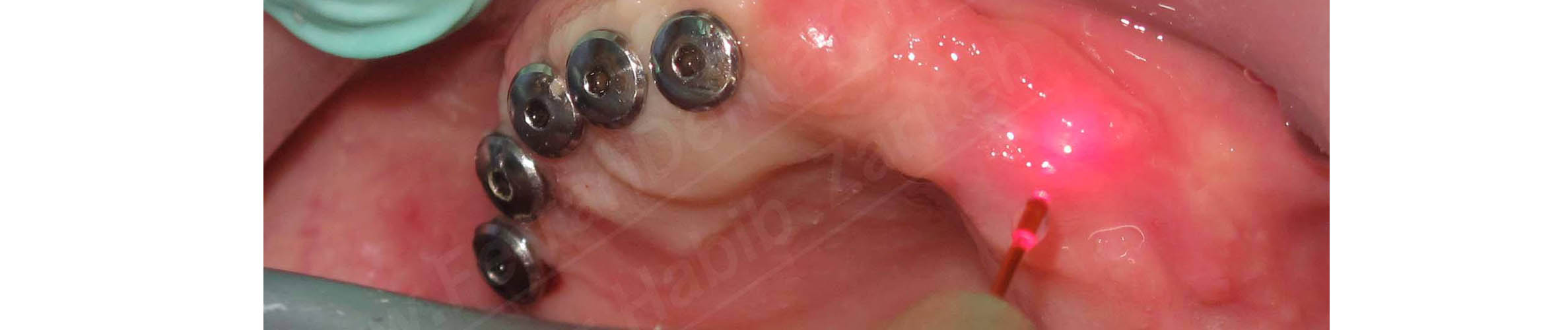


Missing a tooth shouldn't mean losing your confidence. Dental implants are the closest thing to a natural tooth — and at our Beirut clinic, they are placed with surgical precision by one of the most experienced oral surgeons in the region.
Dr. Habib Zarifeh is Head of Oral Surgery at CMC Hospital Beirut (Johns Hopkins International affiliated), holder of an MSc in Laser Dentistry from RWTH Aachen University, Germany, and founder of Smile Infinity® — a medical network present in 12 countries across 4 continents, spanning the Middle East, Africa, Europe and North America, with six multi-specialty medical centres and over 120 staff.
His One Day Implant® protocol means many patients receive their implant and provisional crown in a single visit — no prolonged waiting, no unnecessary second surgeries in the majority of cases.
Whether you need a single tooth replaced or a complete full-mouth restoration, this is where you start.
-
Single Tooth Dental Implant — Beirut
Replace one tooth without touching the others
-
Multiple Teeth Dental Implants — Lebanon
Restore your bite — implant by implant
-
Full Mouth Dental Implants — Beirut
A complete smile, rebuilt from the foundation
-
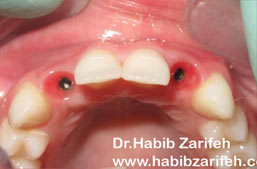
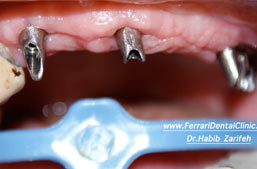
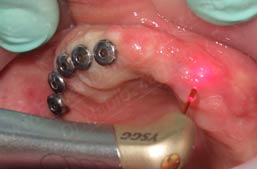
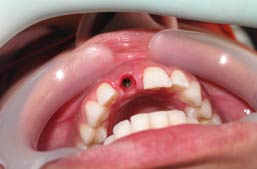
Implants in the Aesthetic Zone — Beirut
Front teeth demand perfection. We deliver it.
-
All-on-4 & All-on-6 Dental Implants — Beirut
Full arch restoration — fixed in one day
-
Mini Dental Implants — Lebanon
Smaller diameter. Same precision. Less invasion.
-
Dental Implants & Bone Grafting — Beirut
No bone? We rebuild it — then place your implant.
-
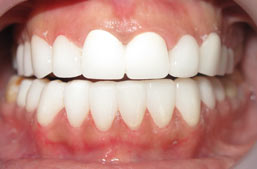
Dental Implants & Hollywood Smile — Lebanon
Implants meet cosmetic dentistry — total transformation
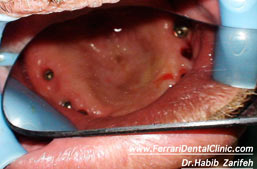
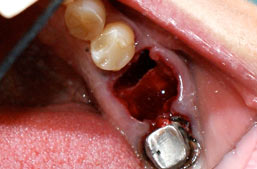


Buccal plate reconstruction:
The upper jaw loses bone volume quickly after tooth loss, especially at the buccal wall. Dr. Zarifeh's team uses GBR (guided bone regeneration) for moderate defects and block bone grafting for more significant volume loss. The right technique is chosen case by case — never a one-size approach.
Bone preservation after extraction:
Protecting the alveolar bone at the time of extraction prevents resorption and preserves the architecture needed for a natural-looking implant outcome.
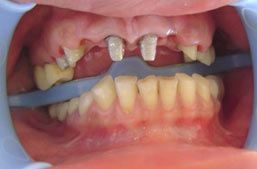
Buccal plate reconstruction:
In the lower jaw, severe buccal wall defects are best corrected with block bone grafting. For minor deficiencies, non-resorbable beta-tricalcium phosphate — known as Easy Graft Crystal — has proven highly effective and predictable.
Bone preservation after extraction:
As with the upper jaw, preserving the alveolar ridge at extraction time protects the foundation for future implant placement and long-term aesthetics.
Dr. Habib Zarifeh's team selects graft materials based on each patient's specific defect and anatomy. The preferred protocol combines synthetic Easy Graft with autogenous bone — pairing the structural benefits of a synthetic scaffold with the biological advantage of the patient's own cells. Every decision is evidence-based and individualized to the case.
Answered by Dr. Habib Zarifeh — International Cosmetic Dentist and Dental Implants Surgeon, Head of Oral Surgery at CMC Hospital Beirut (Johns Hopkins International affiliated), MSc Laser Dentistry, RWTH Aachen University, Germany.
Are dental implants better than a dental bridge?
In most cases, yes. A bridge requires grinding down the two healthy neighbouring teeth to act as anchors, and the bone under the missing tooth continues to shrink beneath it. An implant replaces the root itself: the neighbouring teeth are untouched, the jawbone is preserved, and the restoration can last far longer. A bridge still has its place when the neighbouring teeth already need crowns — Dr. Zarifeh will tell you honestly which is right for your case.
What if I have been told I don't have enough bone for implants?
Being told you 'lack bone' is rarely the end of the story. Dr. Zarifeh performs bone grafting and sinus lift procedures — often in the same session as implant placement — rebuilding the volume needed for a stable implant. As Head of Oral Surgery at CMC Hospital Beirut, he routinely treats the advanced cases other clinics decline. A CBCT scan gives the definitive answer.
How do I clean and maintain dental implants?
Implants are cared for much like natural teeth — brushing twice daily, interdental brushes or floss designed for implants, and a professional cleaning with implant check-up every six months. Unlike natural teeth, implants cannot decay, but the gum around them must stay healthy. Your hygiene protocol is reviewed at every follow-up visit.
Can dental implants fail, and what happens if one does?
Failure is uncommon with proper planning, but it can happen — usually through peri-implantitis (gum infection around the implant), uncontrolled clenching, or poorly planned placement elsewhere. Dr. Zarifeh treats peri-implantitis with laser-assisted decontamination, and accepts revision cases: failed or badly positioned implants placed at other clinics are removed, the site regenerated, and a new implant placed correctly.
Can smokers or diabetic patients get dental implants?
Often yes, with the right protocol. Controlled diabetes is not a barrier when healing is managed carefully, and laser-assisted surgery reduces bleeding and infection risk — the same protocol that allows many cardiac patients on anticoagulants to be treated without stopping their medication. Smoking slows healing and raises failure risk, so we plan smokers' cases more conservatively and advise reducing or pausing smoking around surgery.
Is there an age limit for dental implants?
There is no upper age limit — patients in their seventies and eighties receive implants routinely, and general health matters far more than age. The only true limit is at the young end: implants are placed only after jaw growth is complete, typically from the late teens onward.
What does recovery feel like after implant surgery?
Most patients are surprised by how uneventful it is. With laser-assisted, minimally invasive placement, typical recovery is mild pressure or soreness for 24–48 hours managed with ordinary pain relief, minor swelling that peaks on day two, and a return to normal routine within a day or two. Stitches, when needed, are usually removed or dissolve within 7–10 days.
Which implant brands and systems do you use?
We work with internationally documented premium implant systems in both titanium and metal-free zirconium ceramic, selected case by case according to your bone quality, gum biotype and aesthetic zone. Every implant comes with its manufacturer passport, so your implant's exact brand, size and batch are documented for life — wherever in the world you may need future care.
Can I have sedation or general anesthesia for implant surgery?
Yes. Routine implant placement is comfortable under local anesthesia, but anxious patients and complex full-mouth surgeries can be treated under sedation or full general anesthesia inside CMC Hospital Beirut — a Johns Hopkins International affiliated, JCI accredited hospital — with an anesthesiology team and hospital recovery facilities. Very few dental practices in the region can offer this.
What warranty do I get on my dental implants?
Implant treatment at Smile Infinity® is covered by a written warranty program — including an international warranty for patients treated from abroad, honoured across the network. The exact terms are confirmed in your treatment plan before anything begins, so you know precisely what is covered and for how long.
How do I choose the right implant surgeon in Lebanon?
Look at three things: surgical credentials (is the clinician a trained oral surgeon, and where do they operate?), technology (3D planning, laser assistance, guided surgery), and accountability (written treatment plans and warranties). Dr. Habib Zarifeh is Head of Oral Surgery at CMC Hospital Beirut, holds an MSc in Laser Dentistry from RWTH Aachen University, Germany, and has placed implants for more than two decades — ask any clinic you consider the same questions.
How much do dental implants cost in Lebanon and Beirut?
The fee is built from your specific plan: how many implants, whether bone grafting or a sinus lift is needed, titanium versus zirconium, and the type of final restoration — single crown, bridge or full arch. Lebanon offers a significant saving compared with Western Europe, the Gulf and North America, with no compromise on implant brands or hospital-grade standards. Send your panoramic X-ray on WhatsApp to +961 3 739 783 for a written treatment plan and exact quote.
Smile Infinity® · Dr. Habib Zarifeh — Head of Oral Surgery, CMC Beirut (Johns Hopkins International affiliated) · MSc Laser Dentistry, RWTH Aachen University, Germany · Present in 12 countries across 4 continents.
It's not a smile. It's a signature.